The short answer
A fall furnace checklist for a Pittsburgh home comes down to seven homeowner tasks done in late September or October, before the first night in the 30s: replace the filter, change the thermostat batteries, test carbon monoxide alarms, clear the space around the furnace, check the vent and outdoor PVC pipes, replace the humidifier pad, and test-run the heat.
Then book a professional tune-up for the combustion, heat exchanger and safety checks a homeowner should not do.
Why fall is the right time in Pittsburgh
Pittsburgh's heating season runs from about October to April, and the first cold nights usually arrive in October. A furnace that has sat idle since spring has spent the summer in a basement that is often damp, which is hard on burners, ignitors, wiring connections and the blower motor.
The other reason is timing. When the first real cold snap hits, every furnace that was quietly failing fails at once, and technicians' schedules fill up. Finding a cracked ignitor or a dirty flame sensor in early October is a scheduled appointment. Finding it on a January night with lows in the low 20s is a no-heat call.
Most of the list below takes an afternoon and needs nothing more than a screwdriver and a step stool. Anything involving gas, combustion or high voltage belongs to a technician, and the last sections explain what a professional tune-up adds.
The seven-item homeowner checklist
- Replace or check the furnace filter
- Put fresh batteries in the thermostat
- Test every carbon monoxide alarm and check its replace-by date
- Clear the space around the furnace
- Look over the vent pipe, chimney connection and any outdoor PVC pipes
- Replace the humidifier pad and open the humidifier damper
- Test-run the heat before the first cold night
Work through the first six items with the thermostat set to Off. The details for each follow.
Filter, thermostat and carbon monoxide alarms
Filter
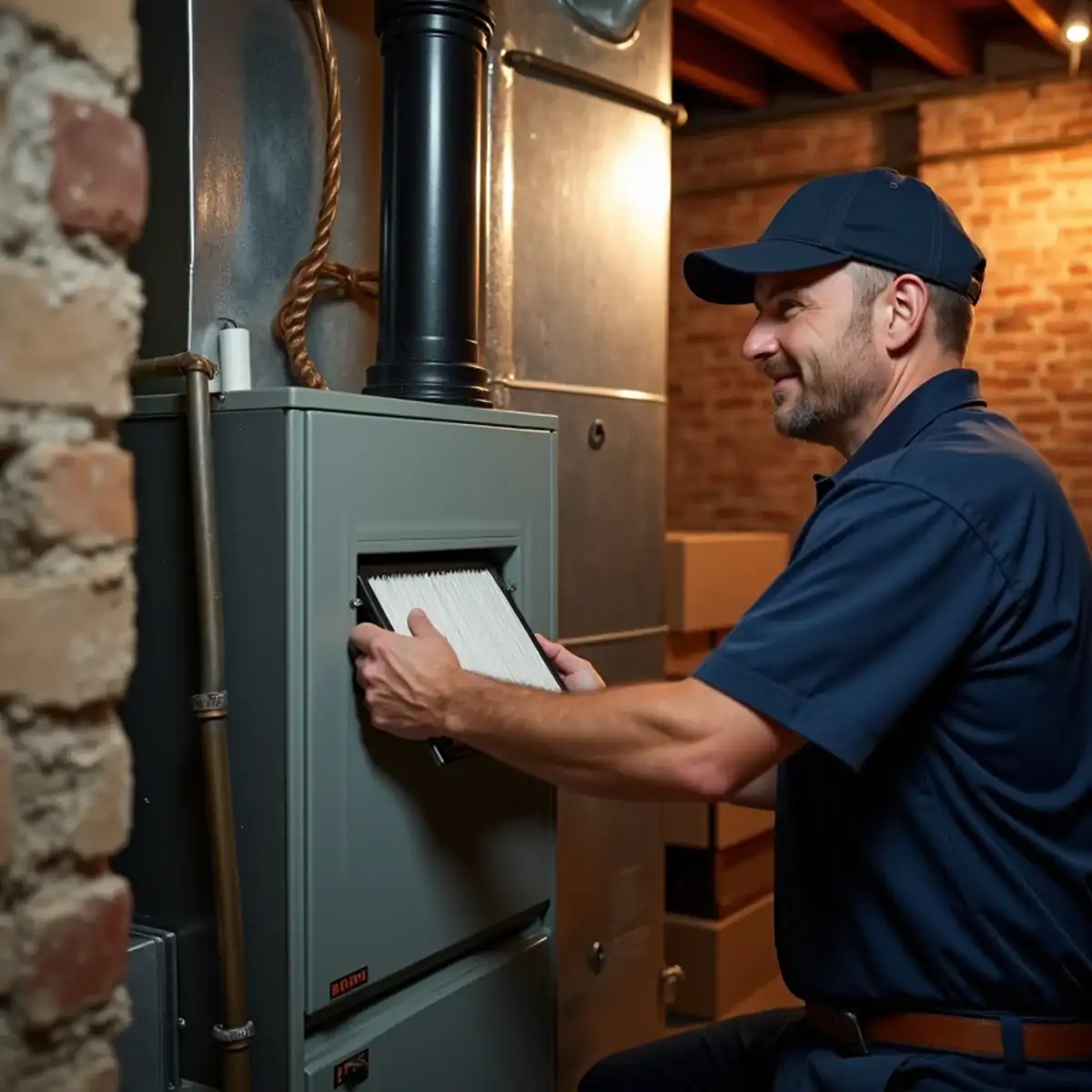
Find the filter slot, usually on the side of the furnace where the return duct connects or in a rack just below it. Note the size printed on the frame and the arrow showing airflow direction, which should point toward the furnace. A standard 1-inch filter usually needs changing every one to three months in heating season, while thicker 4- or 5-inch media filters last longer. Follow the filter maker's interval and check it monthly once the heat is running.
A clogged filter is one of the most common reasons a furnace overheats, trips its high limit switch and starts blowing cool air. A new filter is the cheapest furnace repair there is.
Thermostat
Replace the batteries even if the display still works. Weak batteries cause lost settings and missed calls for heat, and they tend to give out in the first week of hard use. Switch the thermostat to Heat, set the fan to Auto rather than On, and set the schedule for the season if it is programmable.
Carbon monoxide alarms
Press the test button on each alarm, replace the batteries and check the label on the back. CO alarms wear out, and most carry a replace-by date or a manufacture date with a stated service life. You want an alarm on every sleeping level and one near the furnace, mounted per the alarm's instructions.
One filter caution: the densest pleated filters on the store shelf aren't automatically better for a furnace. A high-MERV filter in a furnace with a small return can choke the airflow enough to trip the high limit. Stick to the rating the furnace manual allows, and if you want better filtration, a deeper media cabinet does it without the restriction.
Around the furnace and outside the house
Clear the area
Furnaces in Pittsburgh basements collect storage: paint cans, laundry baskets, holiday boxes. Keep combustibles and anything that gives off fumes, especially gasoline, paint thinner and cleaning chemicals, well away from the burner compartment. Leave a clear path and enough room for a technician to pull the front panels.
Check the venting
On an older 80% furnace, a metal vent pipe runs from the top of the furnace into a brick chimney. Look for rust, gaps at the joints, sagging sections or white crusty deposits where the pipe enters the chimney. Many of the area's brick chimneys are decades old, and some have crumbling clay liners or none at all, so mention any debris at the chimney cleanout to your technician.
On a 90%-plus furnace, two white or gray PVC pipes leave the furnace and exit through a side wall or the roof. Outside, make sure both ends are clear of leaves, nests and shrubs and that they sit well above where snow piles up. Pittsburgh typically sees around 40 inches of snow or more in a winter, and a drift against a low sidewall vent can shut the furnace down.
Humidifier pad
If a whole-house humidifier is mounted on the ductwork, replace the evaporator pad, which is usually crusted with mineral scale by fall. Open the bypass damper for winter, turn the water supply back on, set the humidistat to a moderate level and make sure the drain line is clear.
Take ten minutes to vacuum the supply registers and the return grilles, and pull rugs, beds and couches off them. A summer's worth of dust on the returns is enough to cut airflow on the first cold night.
Test-run the heat before the first cold snap
- Set the thermostat to Heat and raise it three to five degrees above room temperature.
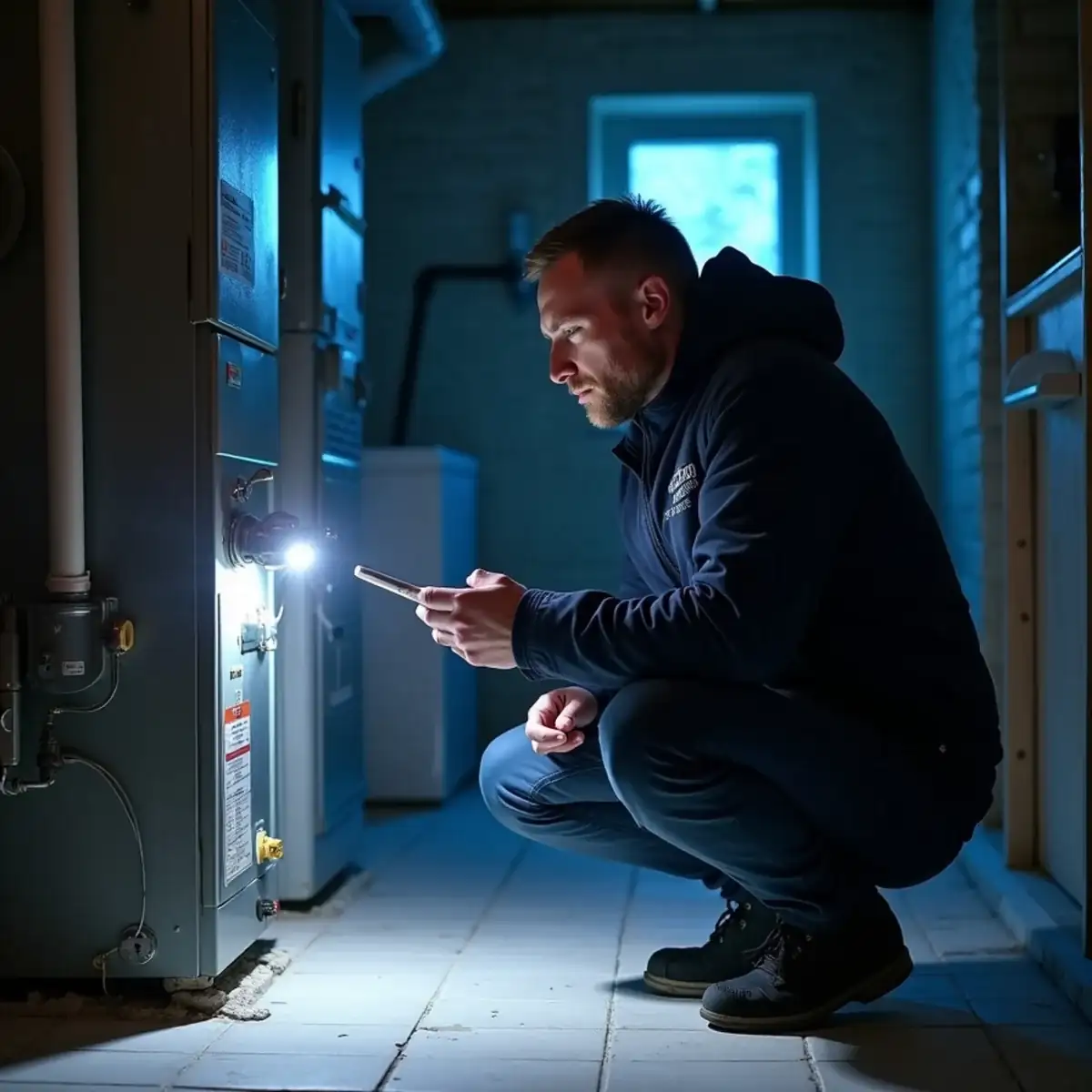
- Listen for the normal sequence: the inducer motor starts, the ignitor glows or sparks, the burners light, and the main blower comes on within a minute or two.
- Feel the registers. The air should turn warm within a few minutes.
- Expect a dusty, burning smell for the first run or two as summer dust burns off the heat exchanger. It should fade within an hour.
- Let the furnace finish a full cycle and shut off on its own.
Call for service if the furnace clicks without lighting, lights and then shuts off after a few seconds, blows only cool air, or makes grinding, squealing or booming sounds. Also call if the burning smell lingers past the first day or the control board's status light is flashing a fault code. Those are repair calls rather than tune-up items, and our no heat repair page explains what happens next. If it will not start at all, our furnace not working checklist walks through the first checks.
While it runs, use your ears and nose:
- A rattle or a metal-on-metal scrape from the blower compartment points to a loose panel or a failing motor.
- A squeal at start-up usually means a worn blower or inducer bearing.
- A boom when the burners light is delayed ignition and needs a technician.
- A hot-plastic or electrical smell that lingers past the first few minutes means switch it off and call.
- A rotten-egg smell means gas: leave the house and call 911 or your gas utility from outside.
What a professional tune-up covers
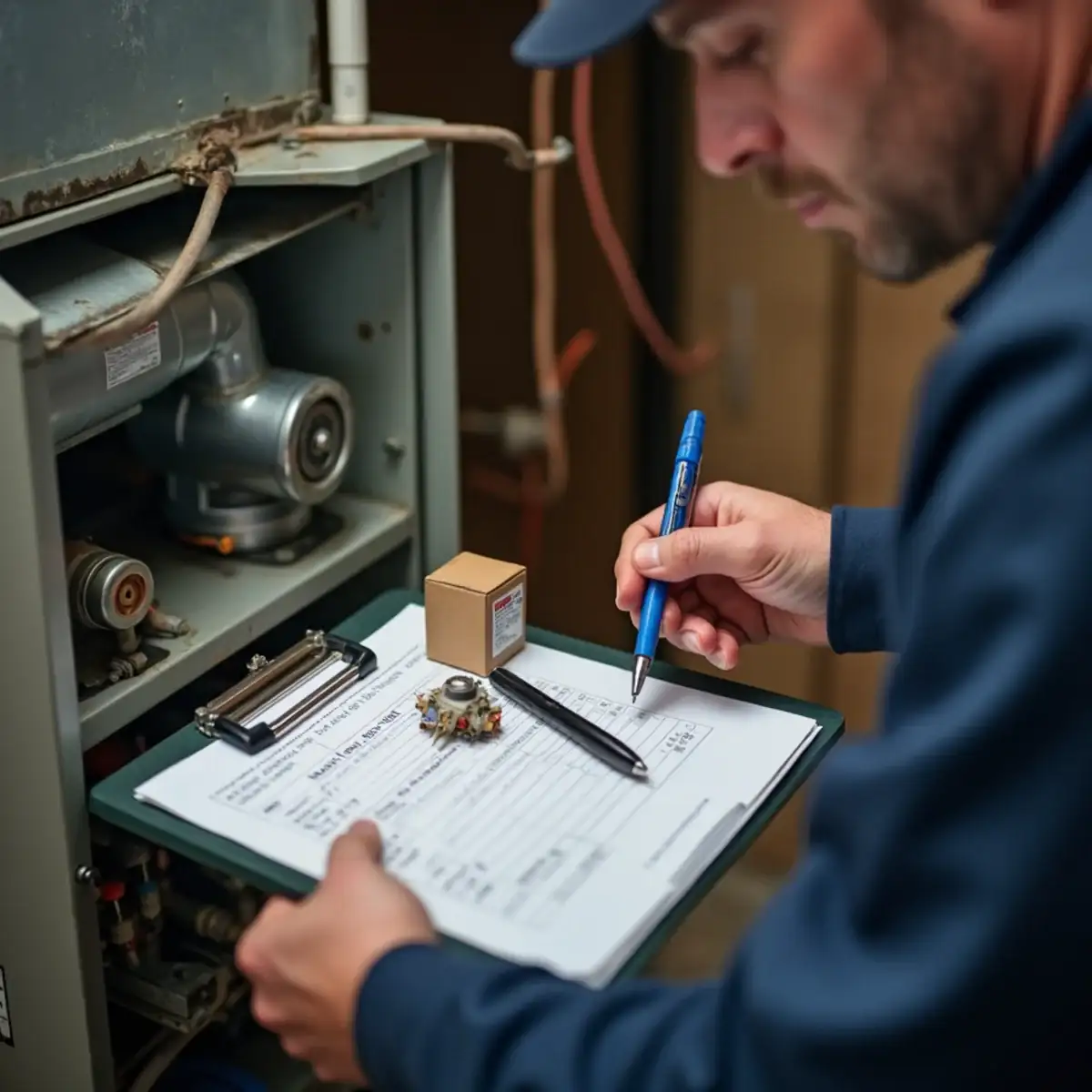
The homeowner checklist keeps the furnace breathing. A furnace tune-up and safety inspection covers the parts that involve gas, flame and exhaust, which have to be tested with instruments.
Typical items in a professional furnace tune-up
- Combustion and CO
- What the technician does: Measures carbon monoxide in the flue gas and the air around the furnace with a combustion analyzer
- Heat exchanger
- What the technician does: Inspects for cracks and rust-through and watches the flame when the blower starts
- Burners and ignition
- What the technician does: Cleans the burners, tests the hot surface or spark ignitor and cleans the flame sensor
- Gas pressure
- What the technician does: Checks inlet and manifold gas pressure against the rating plate
- Venting and draft
- What the technician does: Tests draft on chimney-vented furnaces and checks PVC pipe slope, joints and terminations
- Safety controls
- What the technician does: Confirms the high limit, rollout switches and pressure switch work as designed
- Airflow
- What the technician does: Measures temperature rise and checks the blower wheel, motor and capacitor
- Condensate
- What the technician does: Cleans and refills the trap and checks the drain or pump on 90%-plus furnaces
If the inspection turns up a cracked heat exchanger or a dangerous CO reading, the technician will shut the furnace off, the same reason a gas utility applies a red tag. Our page on red-tagged furnaces explains what that process looks like.
From the technician's side: keep the readings and watch the trend
A single tune-up tells you the furnace is safe today. Three years of readings tell you what's about to fail. Technicians look at how the numbers move from one fall to the next, so ask for them in writing and keep them with the furnace's paperwork.
| Reading | If it drifts year to year | What it usually points to |
|---|---|---|
| Temperature rise (supply minus return) | Climbing toward the top of the data-plate range | Airflow falling: a dirtier coil or wheel, a restrictive filter, or a weakening blower |
| Flame-sensor microamps | Dropping each year | Oxidation on the sensor or a poor ground; a lockout on a cold morning is coming |
| Flue carbon monoxide | Rising | Dirty burners, drifting gas pressure or reduced combustion air |
| Blower motor amps | Rising | Worn bearings or a failing run capacitor |
None of those trends is an emergency on its own, but each one is cheaper to deal with in October than in a January cold snap.
Book a fall tune-up
We send furnace technicians across Pittsburgh and nearby communities, including Shaler Township and the rest of the North Hills. Every HVAC technician we send is licensed where Pennsylvania requires it, and insured.
Call (321) 478-0693 to set up a tune-up before the first cold snap. Calls are answered 24/7, and you get the price before any work starts.
Frequently asked questions
When should I get my furnace serviced in Pittsburgh?
September and early October are the best window. The furnace has not been asked to work hard yet, so problems can be fixed on your schedule instead of during a cold snap, and technicians' calendars fill quickly once overnight lows drop into the 30s. If you missed the fall window, a tune-up in November or December is still worth doing, ideally before the arctic air that often arrives in January.
Is a burning smell normal when I first turn the heat on?
A dusty, slightly burnt smell during the first run or two is normal. Dust settles on the heat exchanger and burners over the summer and burns off once they heat up, and the smell should fade within an hour or so. A smell that lingers, smells electrical or like hot plastic, or smells like rotten eggs is not normal. For a gas smell, leave the house and call your gas utility from outside.
Can I skip a professional tune-up if I change the filter myself?
Changing the filter takes care of airflow, but it does not check combustion, carbon monoxide, gas pressure, the heat exchanger or the safety switches. Those need instruments and training. Most manufacturers also call for yearly professional maintenance, and some warranty terms reference it, so check your furnace's paperwork. The practical approach is both: check the filter monthly and book a professional tune-up every fall.
How much does a fall furnace tune-up cost?
Prices vary with what's included, so compare the scope rather than the headline number. Ask whether combustion and carbon monoxide testing is part of the visit, whether a filter is included, and how any repair found during the visit is priced. You hear the price before the visit is confirmed; our furnace tune-up page lists what every visit covers.
Sources
Get help with this furnace problem
Servingfurnace repair in Shaler Township, PAand nearby towns.