The short answer
If the gas company red-tagged your furnace, the tag means a gas utility technician or an HVAC technician found your furnace unsafe and shut off the gas to it. Common reasons are a gas leak, a cracked heat exchanger, high carbon monoxide readings or failed venting. Do not remove the tag or relight the furnace.
Read the notice, get the problem diagnosed by an HVAC technician, consider a second opinion on a cracked heat exchanger, and follow the utility's instructions on the notice to get gas service restored after the repair or replacement.
What a red tag means and who puts it there
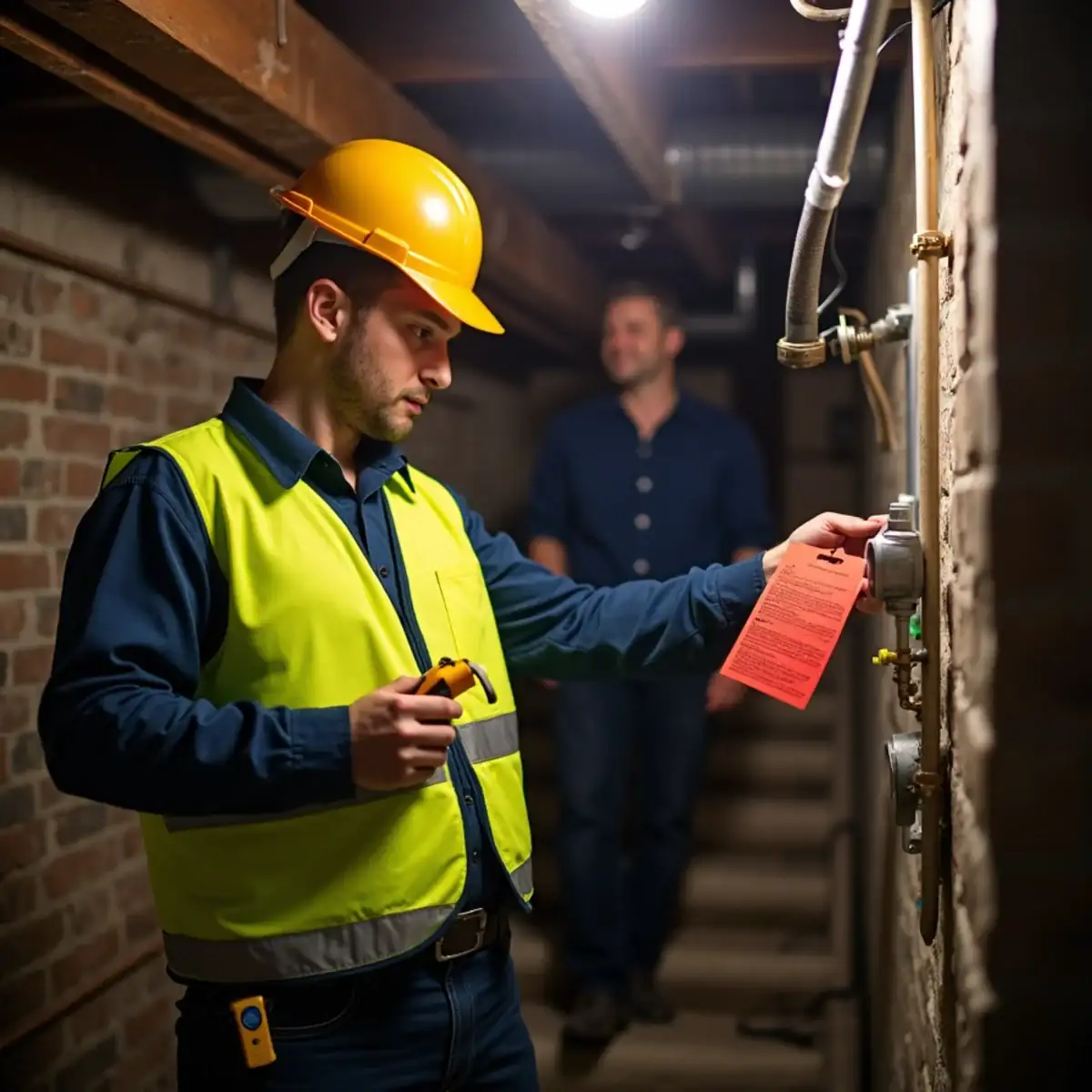
A red tag is a written warning attached to a gas appliance, its shutoff valve or the gas meter. It says the appliance was found to be hazardous and that the gas to it has been turned off. It is not a fine. It is a record that someone with training found a condition they could not leave running.
In the Pittsburgh area, tags usually come from one of two people:
- A gas utility technician from Peoples or Columbia Gas, typically after a gas leak call, a CO alarm call or a service turn-on.
- An HVAC technician who finds a dangerous condition during a repair, a tune-up or a safety inspection.
The tag may cover only the furnace, with its own valve shut off, or the whole house if the meter was locked. The notice should say which. If the tag followed a gas smell or a CO alarm, our guide on what to do first about a gas smell or CO alarm covers the steps before a technician arrives.
Common reasons a furnace gets red-tagged
- A gas leak at the furnace gas valve, a fitting or an old flexible connector.
- A cracked or holed heat exchanger that can let exhaust mix with house air.
- High carbon monoxide readings in the flue or in the living space.
- Exhaust spilling at the draft hood because the chimney is not drafting.
- A blocked, deteriorated or unlined brick chimney, or a disconnected flue pipe.
- Flame rollout or burners that are not burning properly.
- Damaged or improperly installed PVC venting on a high-efficiency furnace.
Older Pittsburgh homes see a lot of chimney-related tags. An 80% furnace venting into a 1940s or 1950s brick chimney with crumbling clay tile, or no liner at all, can fail a draft test even when the furnace itself is in decent shape.
What not to do after a red tag
- Do not heat the house with a gas oven, a grill or a camp heater.
- Use electric space heaters carefully: on a clear floor, plugged straight into the wall, never left running unattended.
- Protect the plumbing in cold weather by opening sink cabinets on outside walls and letting faucets drip.
Read the notice, then get a diagnosis
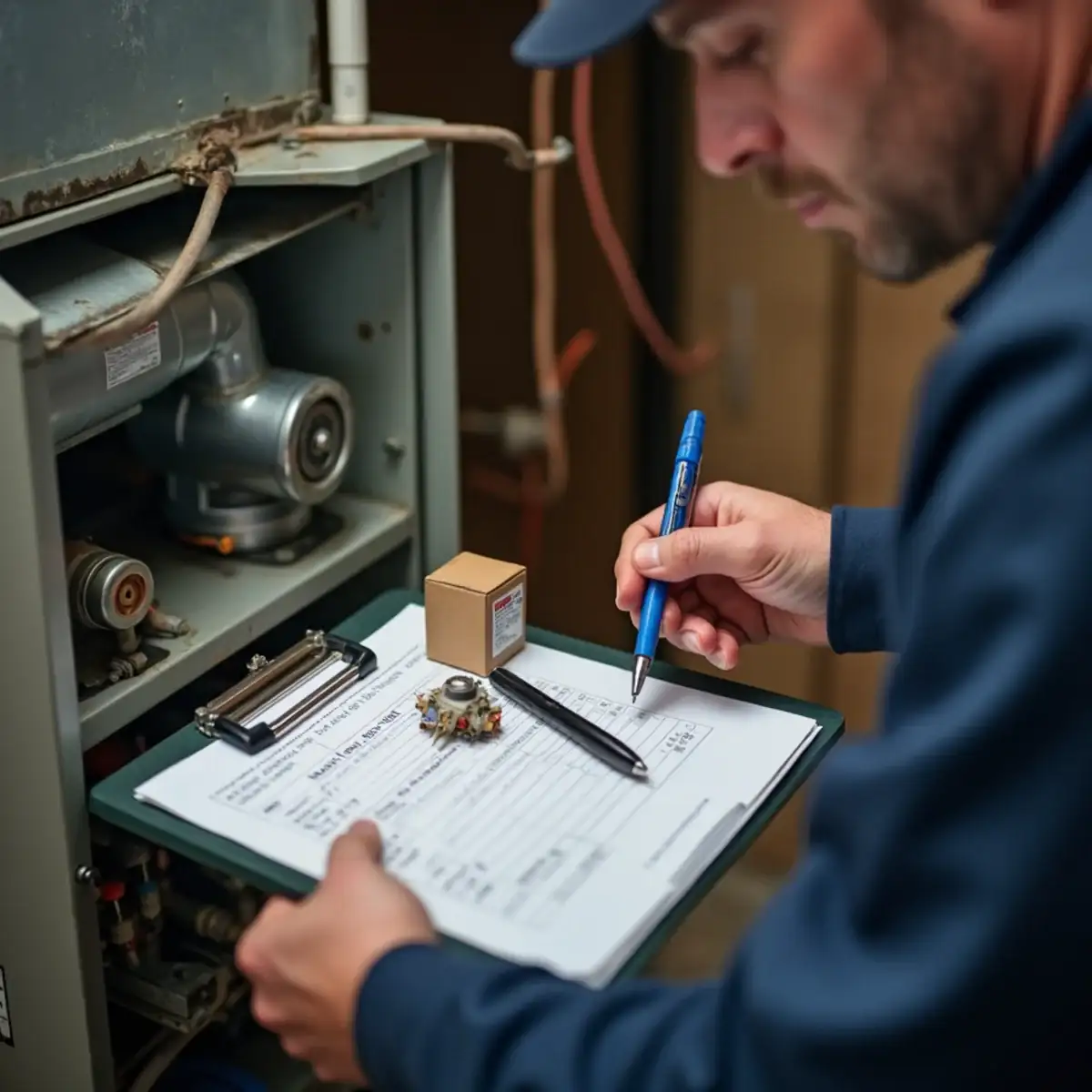
Keep the notice or take a clear photo of it. It usually records what was found, which appliance was shut off and what has to happen before gas service is restored. Ask the person who tagged it for any readings, such as CO levels or draft measurements, and photos.
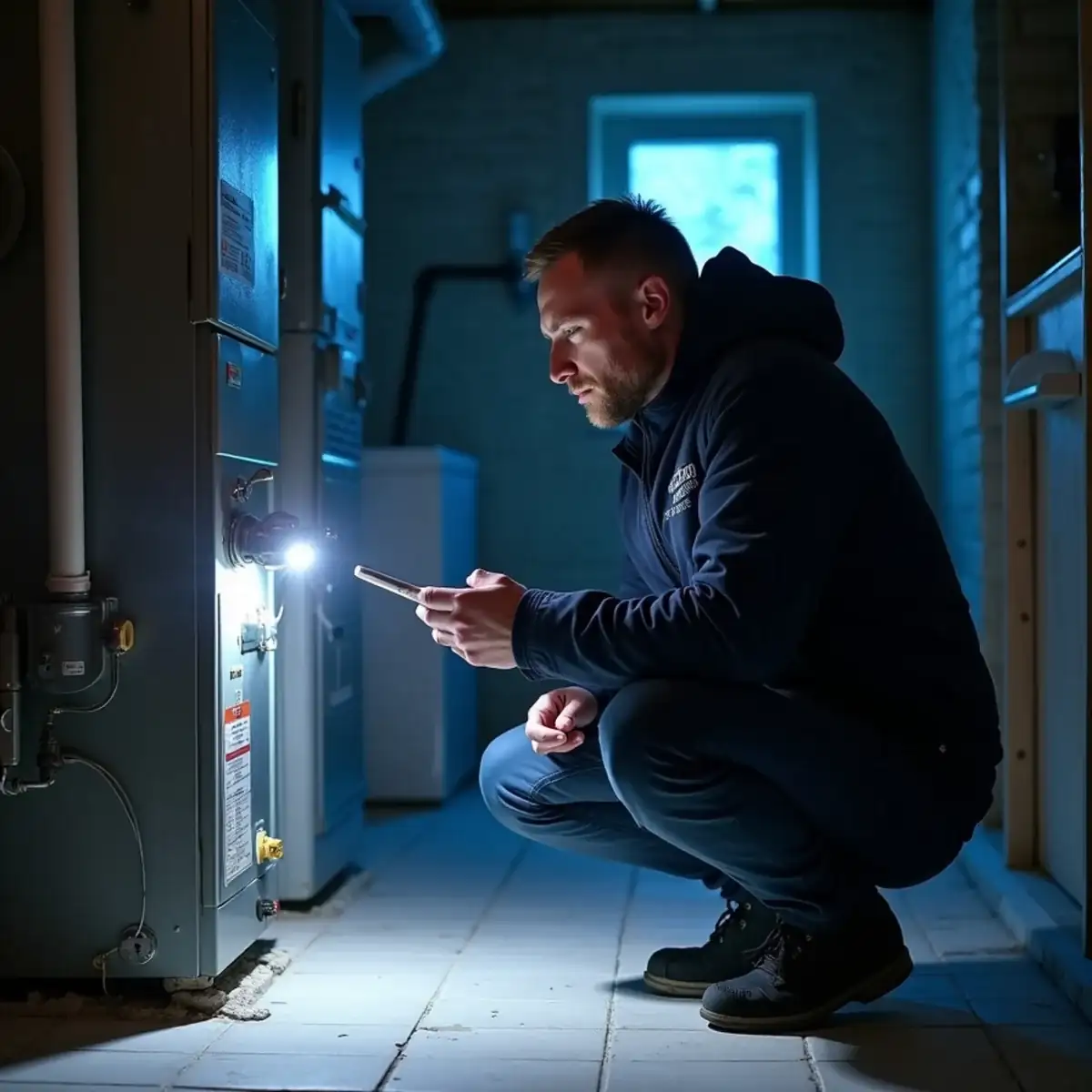
Then have an HVAC technician diagnose the furnace. A full check on a red-tagged furnace includes a combustion analysis, a draft test, a leak test on the gas connections, an inspection of the venting and a close look at the heat exchanger, often with an inspection camera.
What to have ready when you call
- A photo of the red-tag notice, front and back.
- The furnace model and serial number from the plate inside the door.
- The furnace's approximate age and any recent repairs.
- Whether only the furnace was shut off or the whole house, including the stove.
- Whether the gas water heater was also tagged. In many older homes it shares the chimney with the furnace, so a chimney problem can take both out of service.
Questioning a cracked heat exchanger call: how a second opinion works
A cracked heat exchanger usually means a new furnace, so it is reasonable to want a second look. Cracks can be hard to see, and a second technician should be able to show you the evidence.
Cracks tend to form where the metal flexes most as it heats and cools: bends, seams and crimps near the burner openings. Those are the spots a camera inspection checks first, and they are often impossible to see from the burner compartment without one.
- Ask to see photos or camera video of the crack or hole.
- Ask whether CO or oxygen readings changed when the blower started, which can point to a breach.
- Ask about flame behavior: burners that lift, roll out or flicker when the blower comes on.
- Get the findings in writing with the model and serial number.
A second opinion does not mean running the furnace in the meantime. It stays off until a technician clears it.
From the technician's side: ask what was found, and where
The most useful thing you can do after a red tag is find out exactly what reading or defect led to it. "High CO" on its own isn't enough to act on, because where the reading was taken matters as much as the number.
- In the flue. A running gas furnace always produces some carbon monoxide that goes up the vent. A reading there is only alarming when it's well above what that furnace should produce, which usually points to dirty burners, wrong gas pressure or poor combustion air, all fixable.
- In the supply air or the living space. CO coming out of the registers is the real red flag. It suggests combustion gases are getting into the airstream through a failing heat exchanger or backing up through blocked venting.
- At the water heater or chimney. Spillage at the draft hood often means the chimney isn't drafting. That can tag a perfectly sound furnace, and the fix may be a liner rather than a new furnace.
Ask for the reading, where it was taken, and whether the problem is the furnace itself or its venting. Write it down next to the tag.
Is a red tag a sales tactic?
Usually not, and a tag from the gas utility comes from a crew that doesn't sell furnaces at all. Mistakes and overcalls do happen, though, especially around "cracked heat exchanger" findings from a contractor who also quotes the replacement. The answer isn't to ignore the tag; it's to ask for the evidence, such as camera images, combustion readings and supply-air CO, and get a second opinion before you pay for a new furnace. A legitimate tag stays on until the condition is corrected either way.
Repair or replacement: what is actually fixable
| Reason for the tag | Usually | Notes |
|---|---|---|
| Gas leak at a fitting or connector | Repair | Replace the connector or fitting and leak-test |
| Disconnected or damaged flue pipe | Repair | New pipe, proper slope and secure joints |
| Chimney not drafting | Repair | Often a liner or chimney repair |
| Burner or rollout problem | Repair or further testing | Can point to a blockage or a heat exchanger issue |
| Cracked heat exchanger | Often replacement | Heat exchanger replacement is labor-heavy and rarely sensible on an older furnace |
In older suburbs like Penn Hills, many 1950s and 1960s ranches and split-levels are on their third furnace. When one of those red-tagged furnaces is 15 to 20 years old and the heat exchanger is cracked, furnace replacement is usually the practical answer.
For what typical repairs involve before you get a quote, see our guide to furnace repair cost in Pittsburgh.
Getting the gas turned back on
Once the repair or replacement is done, follow the instructions on the red-tag notice for restoring service. The process depends on your gas utility and on what was tagged. In some cases the utility returns to check the work and turn the gas back on; in others the requirements are different. If the notice is unclear, call the utility and ask what it needs. Keep the invoice describing the work in case they ask for it. Do not reopen the furnace gas valve yourself after the work is finished unless the notice or the utility says that is allowed.
Call for a diagnosis or second opinion
If your furnace has been red-tagged, call (321) 478-0693. Pittsburgh Furnace Repair answers 24/7 and connects you with a local HVAC technician who explains what was found and gives you a price for the repair or replacement before work starts. Red tags in a freeze are a common emergency furnace repair call.
Frequently asked questions
Is it ever OK to use the furnace while the red tag is still on it?
No. A red tag means the furnace was found unsafe and the gas was turned off on purpose. Removing the tag, reopening the valve or relighting the furnace can expose the household to a gas leak, a fire or carbon monoxide. Keep it off until an HVAC technician has repaired or replaced it and gas service is restored following the utility's instructions.
Does a cracked heat exchanger mean I have to buy a new furnace?
Not always, but often. Some heat exchangers can be replaced, especially on a newer furnace still under a parts warranty, though the labor is heavy. On a furnace that is 15 years or older, replacing the whole furnace usually makes more sense. Ask for photos or camera video of the crack, and consider a second opinion before deciding.
How quickly can a red-tagged furnace be fixed?
Simple repairs such as a leaking fitting or a disconnected flue pipe can often be done on the first visit if the part is on hand. A chimney liner or a full furnace replacement takes longer to schedule. After the work, the gas has to be restored following the utility's instructions, which can add time. Call (321) 478-0693 to get a technician started on the diagnosis.
I rent. What should I do if the furnace is red-tagged?
Tell your landlord or property manager the same day, in writing, and keep a photo of the tag. Don't run the furnace or let anyone relight it before the listed problem is fixed. The furnace usually belongs to the owner, so the owner arranges the repair; in the meantime, use only space heaters listed for indoor use and keep your carbon monoxide alarms working.
Sources
Get help with this furnace problem
- Red-Tagged Furnace in Pittsburgh
- Furnace Replacement in Pittsburgh
- Emergency Furnace Repair in Pittsburgh
Servingfurnace repair in Penn Hills, PAand nearby towns.